

We use all kinds of tests and measures, along with varied methods to achieve all we do in our world. But what about spirituality? Do we simply act loving to become like Jesus? How can we gauge our level of self-control? How do we know when we are stronger Christians? Today’s post cannot only bring greater understanding but also simplicity to our belief. Read on to hone in on your own holiness.
There was a time in my life when I was confused and struggling, grappling with how I might move my belief to not just behavior but actual experience and expression. I was realizing that Jesus came to rebirth my spirit to have a relationship with me through a spiritual intimacy. This would lead to a transformation of my mind to the mind of Christ. But for me to fully understand this journey, I needed to know the metrics, methodology, and measurement of the Bible.
Metrics are an outcome. When we go to a doctor’s office, one of the first things they do is to take our temperature because that is a key metric of health. In business, sales are a key metric, an outcome we can track.
Methodology is the process that we use to track that outcome. The methodology that a physician’s office uses is a thermometer to measure the metric called temperature. Measurement is basically knowing if the metric is achieved or not, like whether my temperature is 98.6 or 102.
In business, methodology is where I enable my salesmen to engage with potential customers in a more effective way as the process of achieving a desired outcome. Has my sales force reached the target of a million dollars this quarter or not? The numeric values become the measurement.
- Metrics are the outcome.
- Methodology is the process to achieve the outcome.
- Measurement is to see whether the outcome is achieved or not.
Now, how do I apply these to my spirituality? For example, the fruit of the Spirit is love. I realize that I don’t do acts of love to realize I’m a loving person. All my life that was a struggle as I thought for me to be loving, I had to do acts of love. I used love as a methodology to define myself as a person of love. Then I realized the fruit of the Spirit is actually not a methodology, but a metric. The fruit of the Spirit is not a cause but an effect. Love is who I become, so I will then love people.
Self-control is not a methodology toward holiness. I had thought this was up to me to achieve in my life. Self-control is not a cause for holiness but an effect, a fruit of the Spirit. The Spirit of God makes me a person that has self-control. That’s the transformational journey of Christianity.
The metric or outcome is love so I become love. I become peace. I become joy. I become a person of self-control. I may then express all these qualities. When the fruit of self-control is formed in me, I experience self-control in my life. This happens through the journey of intimacy with God.
What is the methodology to experience the fruit of the Spirit? What is the methodology so that the effect of the fruit can be experienced in me and be seen in me?
The simplicity of the Gospel is that the Word of God transforms the mind of man to the mind of Christ. The Spirit of God takes the word of God and births in us the fruit of the Spirit through this journey called transformation, much like a caterpillar is transformed into a butterfly. All the caterpillar has to do in one phase is eat, eat, eat, and then in another phase it just rests, and transformation makes it into a beautiful butterfly.
All we have to do is behold the beauty of God. Behold the Word of God. As we behold more and more, we become more and more like Him. The more we become like Jesus, the more we behave like Jesus.
The metrics are not a methodology. Self-control and loving people are not methodologies. Doing mission work is not a methodology. It’s who we become, the metric of the fruit. When the fruit of the Spirit is formed in us, we begin to express the fruit.
When I become a person of love, I will not choose to love based on color, sexual orientation, politics, or religious denomination. When we become love, we become like who Jesus became. When Jesus became critical and rebuking, it was pointed at the religious. Between the prostitute and the Pharisee, Jesus chose to spend time with the prostitute. He had very strong words towards people who thought they were spiritual in their own eyes when they were not at all. But He was gracious and patient with those who saw their need for Him.
Jesus’ love was not dependent on the object of love. For example, a mango fruit is the same in India or in the United States, whether in a store where only black people go or only white people go. A mango fruit is what it is, everywhere it is. When we become love, we won’t love people based on external factors. We love people because that is who we are, who we have become.
“A new command I give you: Love one another. As I have loved you, so you must love one another. By this everyone will know that you are my disciples, if you love one another.†(John 13:34-35 NIV)
The methodology to live like Jesus is not to act like Jesus but to become like Jesus. There is a huge difference in the two. Acting like Jesus is religion. Becoming like Jesus is a relationship. And the measurement is very simple.
There are three measurements for a relational spirituality based on the Bible.
- Love
Are we able to love people who cannot love us back? Are we able to love people who hate us? Are we able to love people who are throwing stones? Because that’s how Jesus lived. That was His lifestyle. He said, “Father, forgive them.” The measurement for spirituality is: Are we able to love people who hate us? Are we able to live as children of God?
- Diversity
There is an incredible unity in God’s Kingdom that begins to recognize the beauty of diversity. Are we dividing ourselves based on denominations, race, color, or geography? Division and disunity goes against the measurement of spirituality in the Bible.
- Transformational Holiness
If the reality of the evidence of life in me is that I see myself progressively becoming more and more like Jesus in my holiness, in my worldview, there you will find the proper metrics, methodology, and measurement of Christianity.

Order
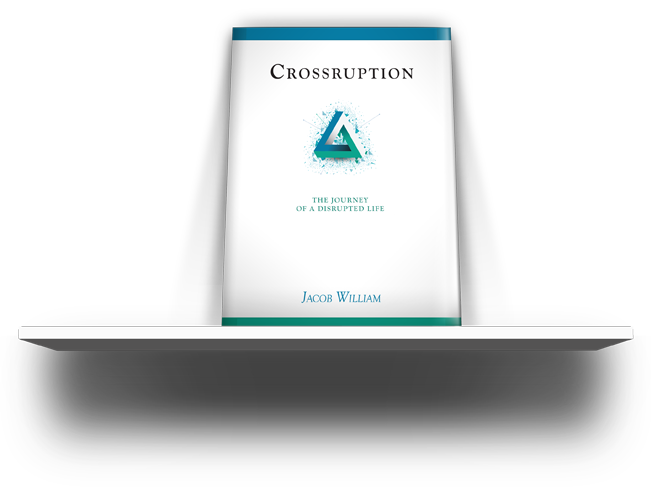
Crossruption: The Journey of A Disrupted life is now available in hardback, paperback and digital editions.
Visit the store and get your copy from your favorite book retailer.
Published by WestBow Press, a division of Thomas Nelson and Zondervan
 BUY THE BOOK